

- Salale University, Ethiopia
- president@slu.edu.et
- +251-111355637
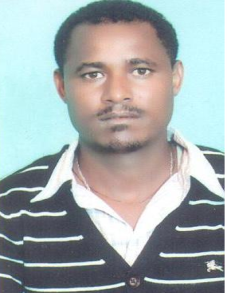
NigusuTadesseMaremi (M.Sc)
Head, Department of Mathematics
Contact
+251 912664979
nugetade1@gmail.com
+251-0111 --
Office: Block 007 G+4, Room No.
P.O. Box: 245
Background
Salale University is one of the public higher education institutions in Ethiopia that was established in July 2015 G.C by the council of ministers following the demand of the community of North Shoa and its surrounding, and in line with the direction of the government as per the proclamation article /No.359/2008. It is located in Oromia region, North Shoa, Fitche town at a distance of 114 km from Addis Ababa. Currently, the university is offering about 41programs clustered in 6 colleges namely: College of Health Sciences, College of Agriculture and Natural Resource, College of Business and Economics, College of Social Sciences and Humanities, and College of Natural Sciences and College of Engineering and School of Law
The Department of Mathematics, which was established in August 2017G.C, is one of the academic programs in the College of Natural Sciences offering BSc. Degree in the regular, and summer-and MSc. Degree in regular and extension(Weekend + Summer) programs. The activities of the department include but not limited to delivering common courses to students from various departments of the University, conducting research and providing community services. In all of the aforementioned and other related activities, the contribution of the departmentis significant at the university and also at national level.
In line with the national policy of higher education that focuses on promoting applied research in science and technology, the department launched postgraduate programs leading to MSc. in Mathematics in the academic year 2021 G.C with streams of Mathematical Modeling, Numerical Analysis, Algebra, Analysis, Differential Equations, and Optimization.
Now we have 23 staff and 34 regular and 55 summer undergraduate students, 13 Postgraduate totally 87 students in our department. In addition, we have graduated a total of 175 under graduate students and 20 post graduate students in the past four year, in both regular and summer program and our tracing study we confirmed that more than 70 percent of them have found employment.
In general, the department is offering the following programs:
- BSc. Degree in Mathematics (Regular).
- MSc. Degree in Mathematics (Mathematical Modeling, Numerical Analysis, Algebra, Analysis, Differential Equations, and Optimization streams).
Vision
- TThe vision of the department is to become a Center of Excellence in teaching, learning and research, bring out the potential of students by providing quality teaching, increase global linkages by attracting foreign scholars and establishing collaborative research programs and to work for wellbeing of humankind through the study of Mathematical sciences.
Mission
Mathematics is one of the main unifying subjects in our modern world. It plays a pivotal role in the development of science, technology, business, computer science and other related sciences including medicine. It profoundly influences the socio-economic development of a society and civilization of our world. Thus, it is imperative that students be equipped with strong mathematics knowledge and skills which enable them to be productive in areas where rigorous thought and precision of results are emphasized.
Hence, the mission of the department is:
- To promote quality teaching, learning and research in the department to become the Center of Excellence.
- To promote quality collaborative work with other stakeholders of mathematical studies.
- To make department Global.
Objectives
The general objective of mathematics department is
- To produce qualified mathematicians, mathematics teachers, mathematics researchers who initiates, promotes and fosters research in pure and applied mathematics, and leaders who shall be an asset for scientific community.
- To make the department global through quality research.
Staff Profile Details
| No | Name | Sex | Qualification | Academic Rank | Specialization | Remark | |
|---|---|---|---|---|---|---|---|
| 1 | Genanew Gofe | M | PhD | Associate Professor | Numerical Analysis | genagof@gmail.com | Active Staff |
| 2 | Fekadu Tolesa | M | PhD | Assistance Professor | Optimization | toli4rage@gmail.com | Active Staff |
| 3 | Imiru Takele | M | PhD | Assistance Professor | Numerical Analysis | imirutakele@gmail.com | Active Staff |
| 4 | Hailu Bikili | M | PhD | Assistance Professor | Differential Equations | haybik@gmail.com | Active Staff |
| 5 | Geleta Tadele | M | PhD | Assistance Professor | Financial Mathematics | geletah2016@gmail.com | Active Staff |
| 6 | Birihanu Mamo | M | PhD Candidate | Lecturer | Modeling | mamodesta2018@gmail.com | Study leave |
| 7 | Sisai Bekele | M | M.Sc. | Lecturer | Numerical Analysis | sisaybekele275@gmail.com | Active Staff |
| 8 | Habtamu Worku | M | M.Sc. | Lecturer | Graph & Combinatory | habtuwork@gmail.com | Active Staff |
| 9 | Feleke Engdawork | M | M.Sc. | Lecturer | Algebra | feleke243@gmail.com | Active Staff |
| 10 | Getachew Tesfaye | M | M.Sc. | Lecturer | Differential Equations | getchtesfaye95@gmail.com | Active Staff |
| 11 | Kefyalew Hailu | M | M.Sc. | Lecturer | Differential Equations | kefyalew2002@gmail.com | Active Staff |
| 12 | Abdisa Bedada | M | M.Sc. | Lecturer | Optimization | <abdibedada777@gmail.com> | Active Staff |
| 13 | Tolosa Tulu | M | M.Sc. | Lecturer | Differential Equations | tolasa111@gmail.com | Active Staff |
| 14 | Nugusu Tadesse | M | M.Sc. | Lecturer | Numerical Analysis | Nugetade1@gmailcom | Active Staff |
| 15 | Lemi Dugma | M | M.Sc. | Lecturer | Operations Research | ofgahalammi6137@gmail.com | Active Staff |
| 16 | Tilahun Tolcha | M | M.Sc. | Lecturer | Graph & Combinatory | tile4one@gmail.com>, | Active Staff |
| 17 | Birke Seyoum | F | M.Sc. | Lecturer | Mathematical Modeling | seyoum143birker@gmail.com | Active Staff |
| 18 | Damisew Tashome | M | M.Sc. | Lecturer | Analysis | demiskuyu@gmail.com | Active Staff |
| 19 | Nilot Ejara | F | M. Sc. | Lecturer | Numerical Analysis | nile10ejara@gmail.com | Active Staff |
| 20 | Abebu Getye | F | M. Sc. | Lecturer | Analysis | abebugetye4@gmail.com | Active Staff |
| 21 | Wubalech Shambel | F | M.Sc. | Lecturer | Optimization | wubalembonita2013@gmail.com | Active Staff |
| 22 | Fayise Adare | F | M.Sc. | Lecturer | Analysis | Active Staff | |
| 23 | Birtukan Getachew | F | Level IV | TA | Computer Science | Active Staff |
Physical facility
The physical facilities of the department are also reasonably suitable for academic work. Offices, text books and references fulfill the minimum requirements. Each academic staff has computer facility connected to the local area network and internet. The department also has one computer laboratory which serves both graduate and undergraduate students with 23 internet connected desktops. The department has its own Research Center for Computational Simulation which was in angulated on Nov 30, 2021 G.C.
Research Thematic Areas
Theme 1: Applied Mathematics
This theme is about application of Mathematics in real life and physical world; it deals with research works such as mathematical modeling, analysis and simulation of problems in biology, chemistry, fluid flow, diffusion processes, business and pattern formation in nonlinear stochastic differential equations; computational mathematics and coding theory; dynamical systems and differential equations; nonlinear analysis; theoretical/computational fluid dynamics; operations research, etc.
This theme encompasses analysis, ordinary and partial differential equations, optimization, control theory, algebra, operational research, dynamical systems, financial mathematics, mathematical modeling, combinatory and graph theory etc., which have their own applications in real world problems and sciences such as engineering, agriculture, economics, medicine, finance, etc. In addition to its role in developing new mathematical theories, the theme deals with relevant applications and model.
>Theme 2: Pure Mathematics
These research theme is all about knowledge generation; it focuses on theoretical research including (but not limited to); operator and fixed-point theories; the development, analysis and application of efficient and robust methods/algorithms for solving challenging problems arising in several mathematical and applied areas; real and functional analysis; boundary value problems/differential equations; numerical analysis and scientific computing; algebra, combinatory and geometry.
Theme 3: Mathematics Education
Sub-theme 1: Ensuring Quality of mathematics Education
This subtheme mainly focuses on relevance of mathematics teaching materials (local & modern); mathematics teaching methods (teacher vs. student centered approaches); horizontal and vertical alignment of contents; survey, assessment and evaluation on problems in teaching-learning process; improving conceptual understanding of mathematics; assessing and evaluating the status of mathematics teaching in Ethiopia; problems related to the teaching and learning of Mathematics; critical analysis of teaching of geometry as compared to different models; problem solving approach in mathematics; analysis of different models of teaching Algebra; assessment of validity of mathematics curriculum and its implementation in schools and universities; evaluating assessment methods at all levels; factors of students’ academic performance and failure in mathematics.
Sub-theme 2: Improving the competence of mathematics teachers
This subtheme mainly focuses on capacity building for mathematics teachers; mathematics teachers’ competencies and enhancement; improving school capacity and teaching facilities; university/school links in resource sharing and capacity building.
Community Service Areas
After assessing the needs of schools and education sectors, the department identified to work on the following as a community service.
Ensuring Quality of mathematics Education
This includes giving different training to the teachers on how to prepare teaching aids, on how to teach different portions of mathematics using different methods of teaching, how to use different soft wares to simplify solving mathematical problems and others.
Improving the competence of mathematics teachers
This mainly focuses on capacity building for mathematics teachers; mathematics teachers’ competencies and enhancement; improving school capacity and teaching facilities; university/school links in resource sharing and capacity building.
Consultancy and Trainings
The department is consulting and giving training on mathematical software (like Python, MatLab, LaTex, Mathematica) for Salale University academic staffs, and for the surrounding community.