

- Salale University, Ethiopia
- president@slu.edu.et
- +251-111355637
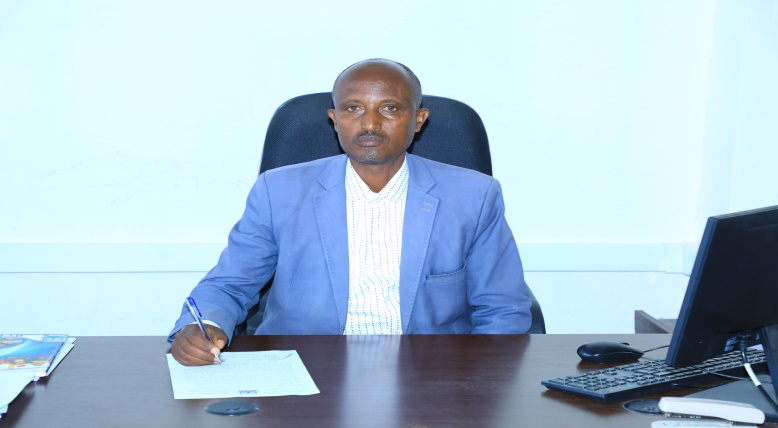
Executive for Internal Audit
Contact
Name: Dereje Muleta Abebe
Tel:+251911354766
dereje_muleta@slu.edu.et
+251-0111 60 98 05
Administration Building, 3rd floor, Room No. 162
P.O. Box: 245
Brief Message of Executive for Internal Audit
In a message to the university’s stakeholders, the Executive of Internal Audit underscored the vital role internal audit plays in upholding the integrity, efficiency, and transparency of the university’s operations. The Executive reaffirmed the department’s dedication to evaluating and enhancing internal controls, managing risks, and ensuring regulatory compliance—efforts that collectively support the university’s financial stability and academic mission. The message emphasized that the Internal Audit department operates with the highest standards of independence and objectivity, offering valuable insights and recommendations to university leadership. It also highlighted the department’s collaborative approach, working closely with various units to promote accountability, prevent misconduct, and foster a culture of continuous improvement. Through these efforts, the department remains committed to protecting the university’s reputation and resources, ensuring its long-term success.
Vision
- To ensure transparent and effective audit of resource management by 2030.
Mission
- The mission of the Executive Internal Audit is to conduct risk-based audits and provide independent, reliable assurance, advice, and insights to stakeholders, all aimed at enhancing the value of the university.
- Audit Planning and Execution: Develops a risk-based annual audit plan aligned with departmental priorities, submits it for presidential and ministerial approval, and ensures its effective execution.
- Evaluation and Assurance: Assesses the effectiveness of internal controls, verifies compliance with laws and policies, and conducts financial and performance audits to ensure integrity, accountability, and operational efficiency.
- Advisory and Investigative Services: Provides expert advice on risk management and internal controls, conducts special audits as requested by the president, and investigates misconduct or irregularities..
- Capacity Building and Awareness: Delivers training programs for staff on internal controls and fraud prevention, while ensuring that auditors are skilled, knowledgeable, and equipped to perform audit duties effectively.
- Reporting and Follow-up: Prepares and submits audit findings and performance reports to the president and minister, follows up on corrective actions, and verifies year-end inventory and cash count processes in line with financial regulations.
Back ground of Executive of Internal Audit
Salale University was established in 2008 E.C. and began its operations in 2009 E.C. However, the Internal Audit function was not in place until the end of 2010 E.C. Following its establishment, one of the first priorities of the Executive Internal Audit was to recruit qualified internal audit professionals to build a capable team. Currently, the Internal Audit department consists of one Executive Internal Auditor and six audit professionals based at the main campus. Additionally, the Comprehensive Specialized Hospital is supported by one Internal Audit Team Leader and three audit professionals. In total, the department is staffed with eleven audit personnel. The Executive Internal Audit is dedicated to promoting transparency, accountability, and the efficient utilization of resources throughout the university. By conducting comprehensive audits of financial, performance, and compliance activities, the department provides independent and objective assurance that the university complies with legal and regulatory requirements. It also identifies risks and opportunities for improvement.
Furthermore, the Executive Internal Audit plays a vital role in enhancing risk management, preventing fraud, and promoting operational effectiveness. Through timely reporting and close collaboration with university leadership, the department works to strengthen internal controls, uphold the integrity of financial reporting, and support the university in achieving its mission and long-term objectives.
Roles and Responsibilities of the Legal Services Executive Office
List of Executives
- Head of President's Office
- Executive of Legal Services
- Executive of Ethics Monitoring
- Executive of Public and External Relations
- Executive of Internal Audit
- Executive of Women and Social Affairs
- Executive of Strategic Affairs
- Executive of Institutional Transformation
- Executive of ICT
- Special Assistant to V/President
- Resource Development and Revenue Generation Executive
- Competency and Human Resources Management Executive
- Executive of Procurement
- Executive of Finance
- Student Clinic
- Education Quality Improvement Directorate
- Academic Programs Directorate
- Freshman Directorate