
- Salale University, Ethiopia
- president@slu.edu.et
- +251-111355637
President's Message
Contact
Name: Feyera Dinsa (Ph.D)
+251-911235189
president@slu.edu.et
+251-111355637
P.O. Box: 245
Administration Building 3rd floor Room 3
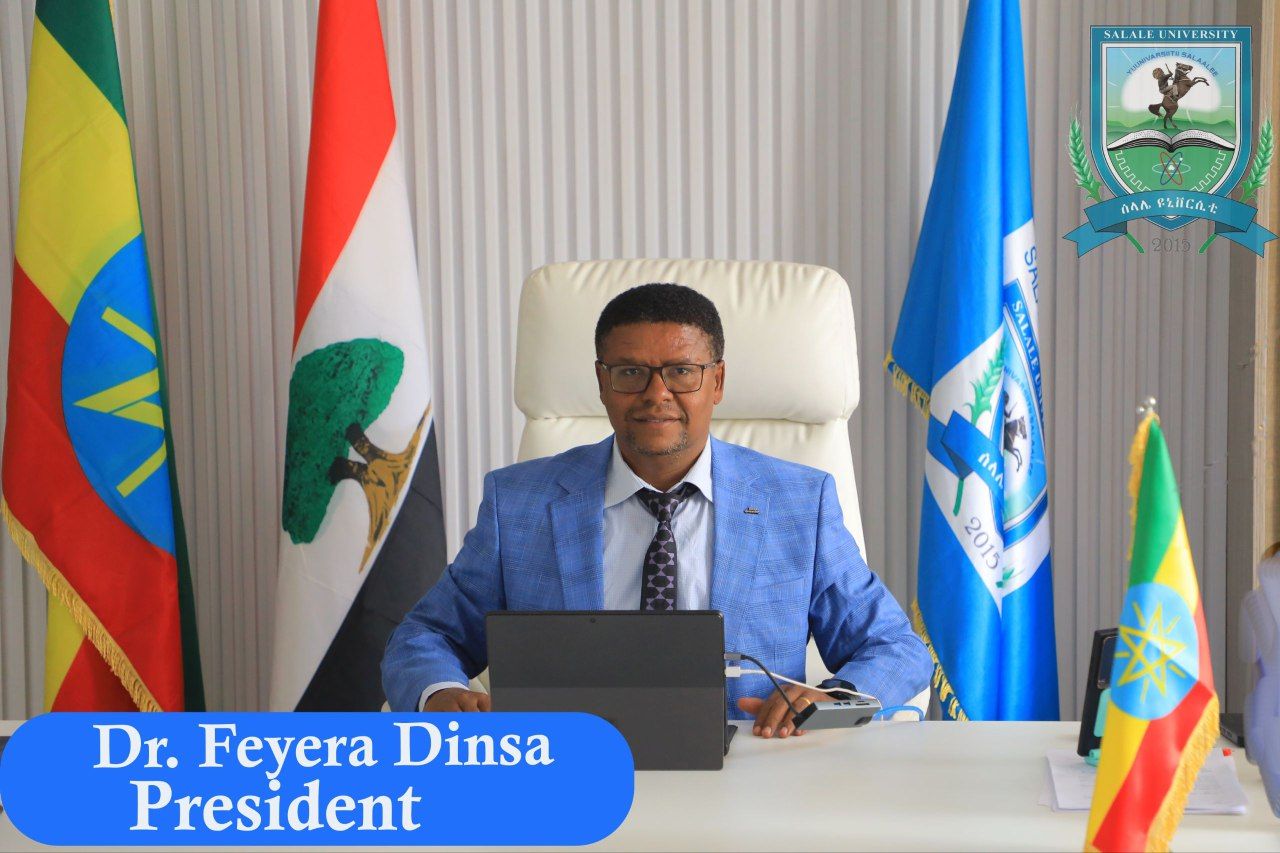
Feyera Dinsa (Ph.D)
Salale University President
Welcome to Salale University’s (SlU) Official Website,It is my great honor to serve as the President of Salale University, and I am deeply inspired to work alongside the dedicated and enthusiastic staff of our institution. I firmly believe that education is the most powerful tool to drive national progress and improve lives in all dimensions. It serves as the foundation for all forms of advancement, achievable only when access and equity are ensured.
With this vision, and guided by our motto, "Co-Creating Quality," Salale University was established in 2015 in Fiche town, North Showa Zone, Oromia Region, located 112 kilometers from Addis Ababa. Since its inception, SlU has been steadfastly committed to its three core missions: education, research, and community service. The University began its academic journey with nine undergraduate programs. Today, it offers more than thirty undergraduate programs, and we have finalized preparations to launch postgraduate programs in various fields by 2020. Our region, North Showa, widely known as "Salale" for historical reasons, is uniquely positioned, bordered by two major tributaries of the Nile River—Mogor and Jama—as well as the Nile itself. This area has attracted significant attention from researchers and academics due to its potential mineral resources.
Read More...
Upcoming Events
Calendar
| Su | M | Tu | W | Th | F | Sa |
|---|
Salale University Hosts Training on Research Ethics
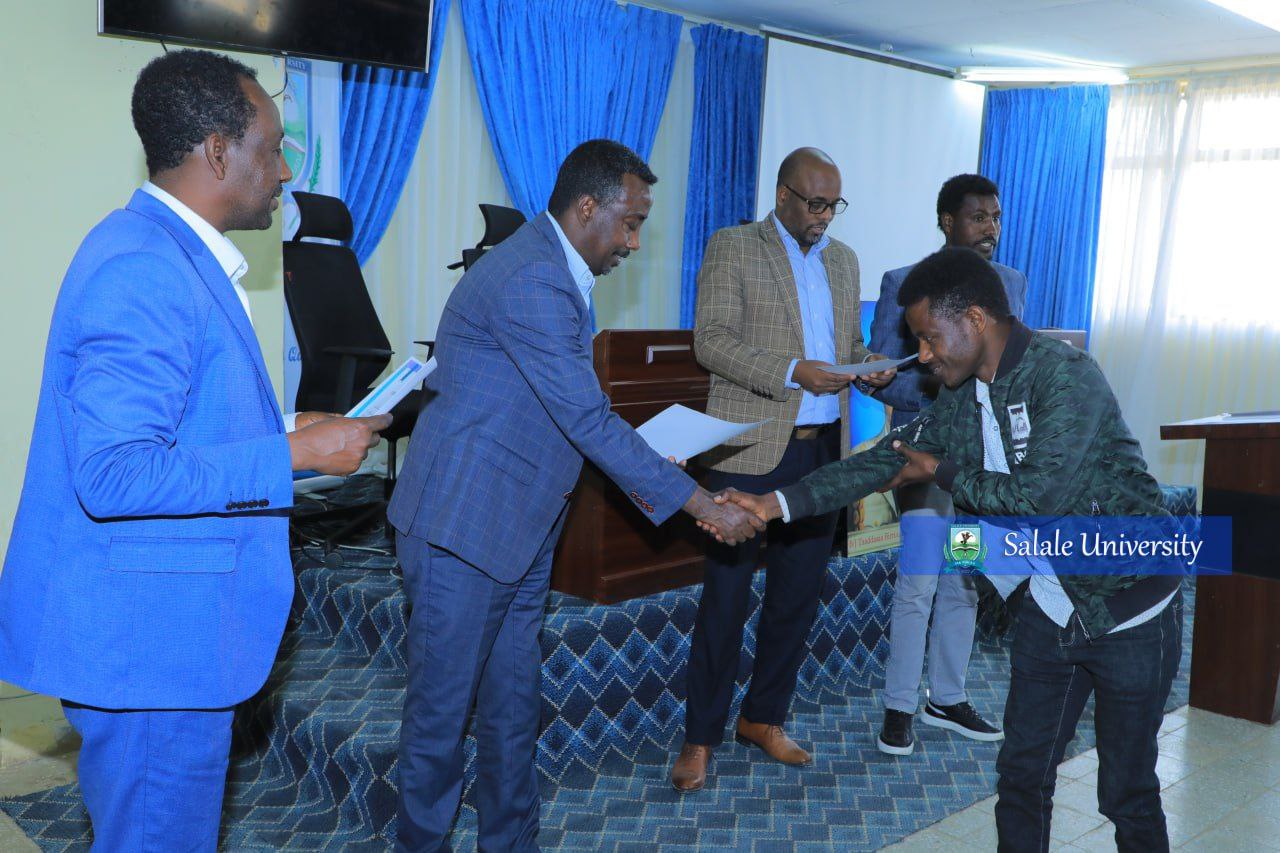
Salale University’s Research Ethics Review Team organized a three-day training session for academic staff from February 14–16, 2025, at the Seminar Hall.
During his welcoming speech, Endeshaw Mengistu, Director of the Quality Assurance and Enhancement Directorate, extended a special welcome and gratitude to both the trainees and trainers.
In his opening remarks, Dr. Tsegaye Deyou, Vice President for Academic and Research Affairs, emphasized that research ethics are essential for maintaining academic integrity, protecting participants, ensuring responsible conduct, and fostering trust and accountability in higher education. He highlighted that ethical principles must be upheld in all professional activities and that every research project aimed at solving problems should adhere to these standards. Additionally, he stressed the importance of the training, urging participants to follow the schedule and engage fully in the program.
The training covered two key areas: understanding international and national ethical guidelines and navigating the ethics review process. The sessions were led by Dr. Solomon Balemi, Director of the Academic Programs Directorate, and Dr. Habteyes Hailu from the College of Health Sciences.
Participants engaged in in-depth discussions on ethical guidelines, asking questions, sharing suggestions, and providing feedback throughout the training.
During the closing ceremony, Dr. Genanew Gofe, President of Salale University, encouraged attendees to apply the knowledge and skills gained to address real-world challenges, benefiting both individuals and the university. He emphasized that research should not be pursued solely for personal recognition but should contribute meaningfully to the development of the university and the country. Dr. Genanew also expressed his gratitude to the organizers and trainers for facilitating this valuable opportunity.
The training was attended by 35 academic staff members, including two female participants. At the conclusion of the program, Dr. Genanew Gofe presented certificates to the trainees.