

- Salale University, Ethiopia
- president@slu.edu.et
- +251-111355637
President's Message
Contact
Name: Feyera Dinsa (Ph.D)
+251-911235189
president@slu.edu.et
+251-111355637
P.O. Box: 245
Administration Building 3rd floor Room 3
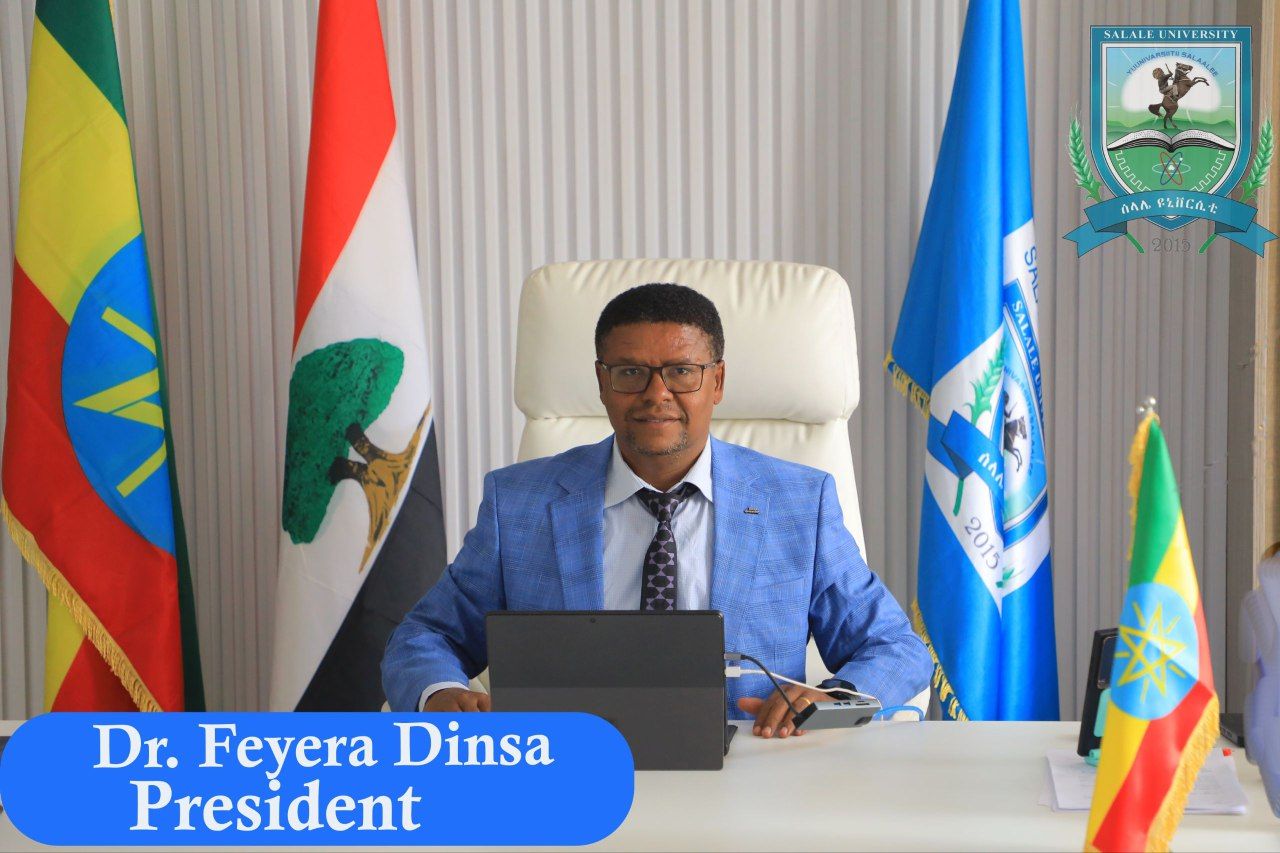
Feyera Dinsa (Ph.D)
Salale University President
Welcome to Salale University’s (SlU) Official Website,It is my great honor to serve as the President of Salale University, and I am deeply inspired to work alongside the dedicated and enthusiastic staff of our institution. I firmly believe that education is the most powerful tool to drive national progress and improve lives in all dimensions. It serves as the foundation for all forms of advancement, achievable only when access and equity are ensured.
With this vision, and guided by our motto, "Co-Creating Quality," Salale University was established in 2015 in Fiche town, North Showa Zone, Oromia Region, located 112 kilometers from Addis Ababa. Since its inception, SlU has been steadfastly committed to its three core missions: education, research, and community service. The University began its academic journey with nine undergraduate programs. Today, it offers more than thirty undergraduate programs, and we have finalized preparations to launch postgraduate programs in various fields by 2020. Our region, North Showa, widely known as "Salale" for historical reasons, is uniquely positioned, bordered by two major tributaries of the Nile River—Mogor and Jama—as well as the Nile itself. This area has attracted significant attention from researchers and academics due to its potential mineral resources.
Read More...
Upcoming Events
Calendar
| Su | M | Tu | W | Th | F | Sa |
|---|
Training of Trainers on Human Trafficking Held at Salale University
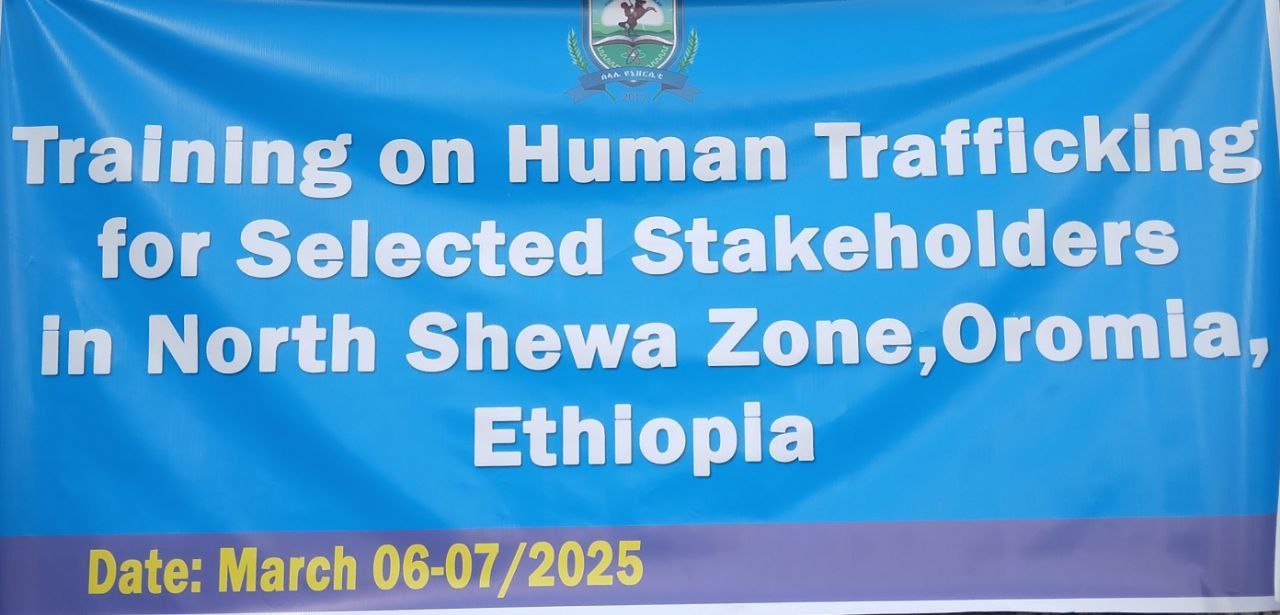
Salale University hosted a Training of Trainers session on human trafficking, emphasizing its significance as both a national and global crisis.
Dr. Tsegaye Deyou, Vice President for Academic and Research Affairs, inaugurated the event, highlighting the severe consequences of human trafficking. He stressed that neglecting the issue leads to the deportation of individuals who could contribute to national development, resulting in economic instability and human suffering. He underscored the importance of raising awareness, creating job opportunities, and educating communities as key strategies to combat trafficking. He urged participants to fully engage with the training, as it plays a crucial role in addressing the problem.
The two-day training was conducted by Mr. Shelema Dadi, Mr. Belete Alemu, and Mr. Fiseha Getachew from the College of Social Sciences and Humanities. The sessions covered the causes and consequences of human trafficking, preventive measures, and relevant national and international laws, providing a comprehensive framework for understanding and tackling the issue effectively.
Participants expressed their commitment to applying the knowledge and skills gained to drive behavioral change in their communities.
In his closing remarks, Dr. Tadesse Birhanu, Director of Technology Transfer and Community Service, emphasized that training alone is not enough. He urged attendees to transform their understanding into action, fostering a cultural shift to reduce reliance on migration and prevent the conditions that lead to trafficking.